River Logistics Craft
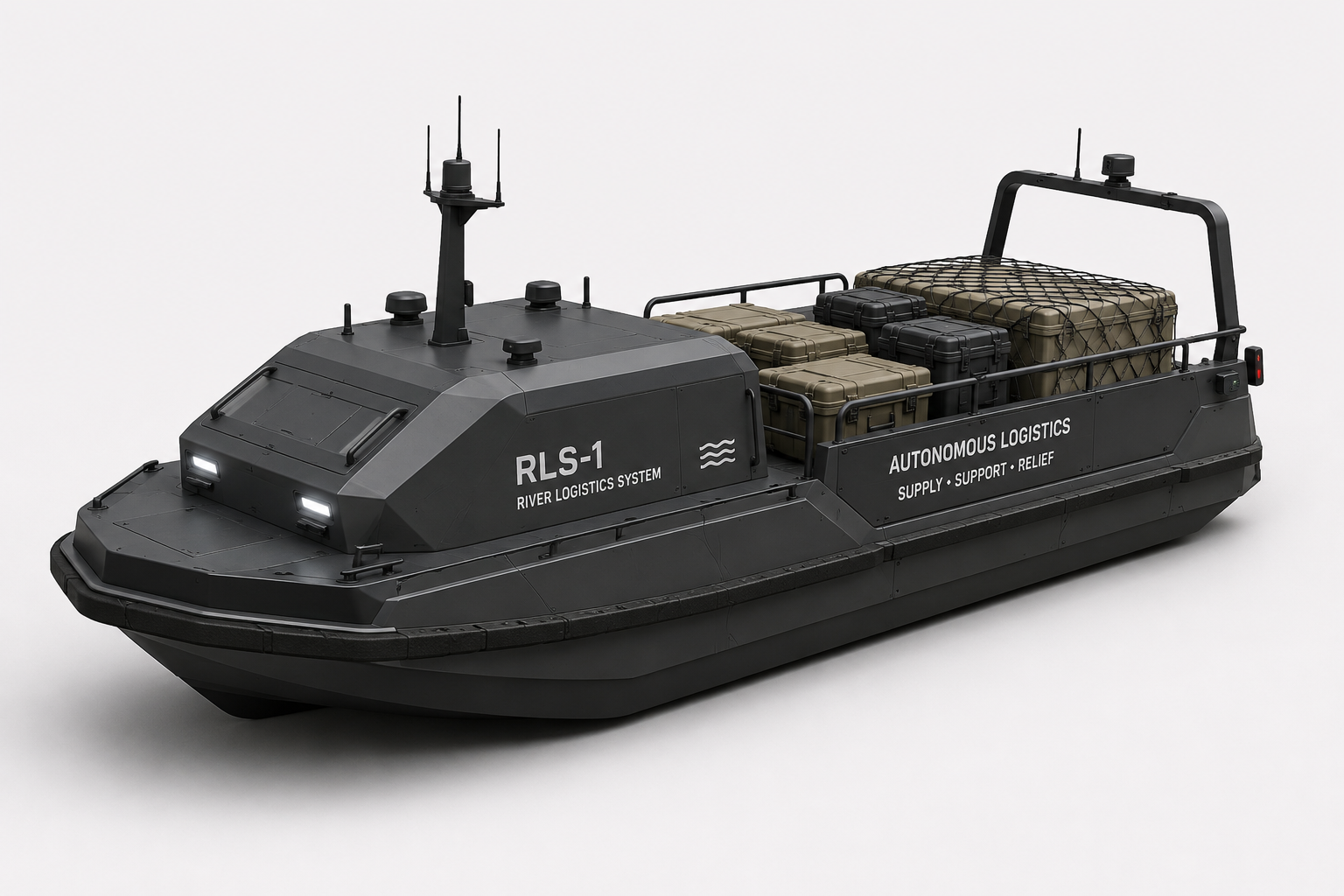
An unmanned, compact shallow-draft craft that moves critical supplies along rivers too small or remote for conventional barges.
Draft
0.6 m loaded
PAYLOAD
1000 kg
Range
850 nm
Crew
0 (unmanned)
The problem
What's failing today.
Roads are the first thing to fail in floods, war and infrastructure collapse. Many regions have navigable rivers and waterways reaching deep into the interior, but conventional barges are too large and conventional boats still need exposed crews in dangerous areas.
The proposed solution
What the concept does.
An unmanned, compact catamaran with a shallow draft, electric water-jet drive and a small cargo hold sized for pallets, water drums, medical packs and mission equipment. Small enough to reach tributaries and canals, large enough to carry what a team needs.
Key design features
How the concept earns its place.
Feature · 01
Shallow-draft catamaran
A compact twin-hull design with water-jet propulsion operates in under a metre of water, reaching tributaries and flooded streets that block everything else.
Feature · 02
Compact cargo hold
An enclosed, weather-tight hold sized for standard pallets, water drums and medical packs. Small enough to beach and reload by hand, large enough to sustain a forward team.
Feature · 03
Bank-side micro-hubs
Small unloading points need only a clear bank and a power connection. No formal port, crane or heavy infrastructure required.
Feature · 04
Fully unmanned
Designed from the keel up for remote and autonomous operation. No crew on board, no human exposure on dangerous routes.
Potential applications
Where it earns its place.
- Humanitarian resupply along inland rivers and canals
- Low-carbon cargo movement in developing regions
- Disaster response when road networks are cut
- Mobile logistics for expeditionary and reconnaissance teams
Future development
Where it goes next.
- Hybrid hydrogen-electric variant for extended range
- Medical evacuation fit with stretcher accommodation
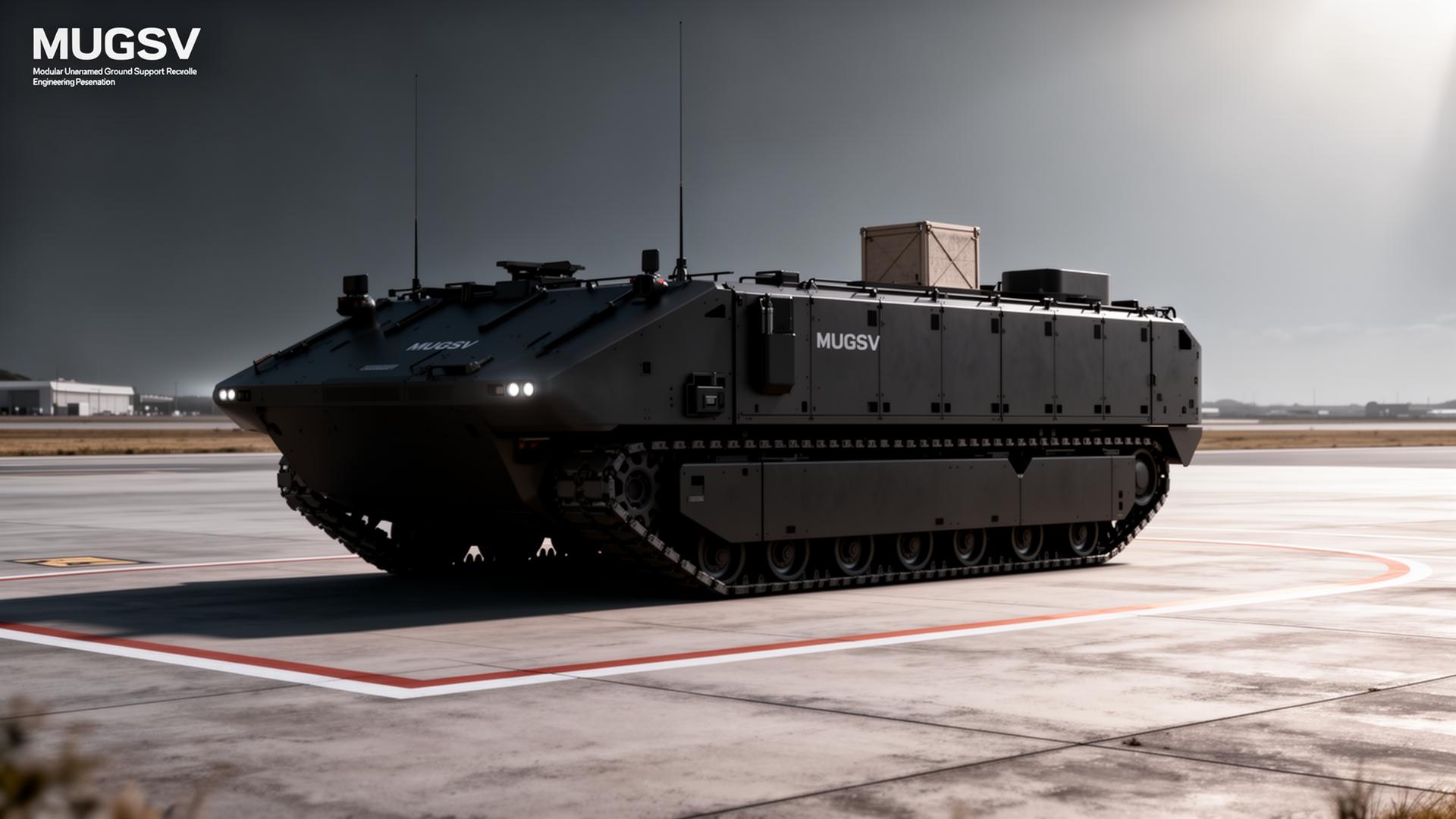
- Integration with MUGSV for first/last-mile transfer
Platform evolution
Hull Variants
The same compact hull and cargo hold can be reconfigured for the mission in front of it. Small, unmanned and adaptable.
Variant · 01
CGOCargo Variant
Baseline configuration with an open cargo deck and enclosed hold for pallets, water, batteries and mission supplies.
Key features
- Pallet-sized cargo hold with lashing points
- Electric water-jet drive
- Autonomous navigation and docking
Operational benefits
- Reopens rivers and canals as logistics arteries when roads are gone
- Small enough to beach and reload by hand
Variant · 02
MEDMedical Variant
Modified hold with environmental control, stretcher brackets and medical stowage for casualty evacuation and forward resupply.
Key features
- Two stretcher positions with tie-down and climate control
- Medical equipment and consumables stowage
- Quick-access loading hatch
Operational benefits
- Brings medical supplies and evacuation to communities the road never reaches
- Repositions overnight as the situation moves
Variant · 03
WKSMobile Workshop Variant
Field repair and maintenance variant carrying tools, spares and a small workbench for MUGSV, drone and small-craft support.
Key features
- Workbench and parts stowage in the hold
- Portable generator and welding kit
- Small crane davit for engine and component lifts
Operational benefits
- Keeps the wider ecosystem running far from formal bases
- Avoids long return trips to rear depots
Variant · 04
C2Command & Comms Variant
Mobile command post with comms mast, compact operations area and accommodation for a small forward headquarters.
Key features
- Telescoping SATCOM, LTE and HF mast
- Enclosed operations and planning workstation
- Compact accommodation and galley module
Operational benefits
- Stands up a headquarters anywhere with navigable water
- Survives the loss of fixed infrastructure
Continue exploring